
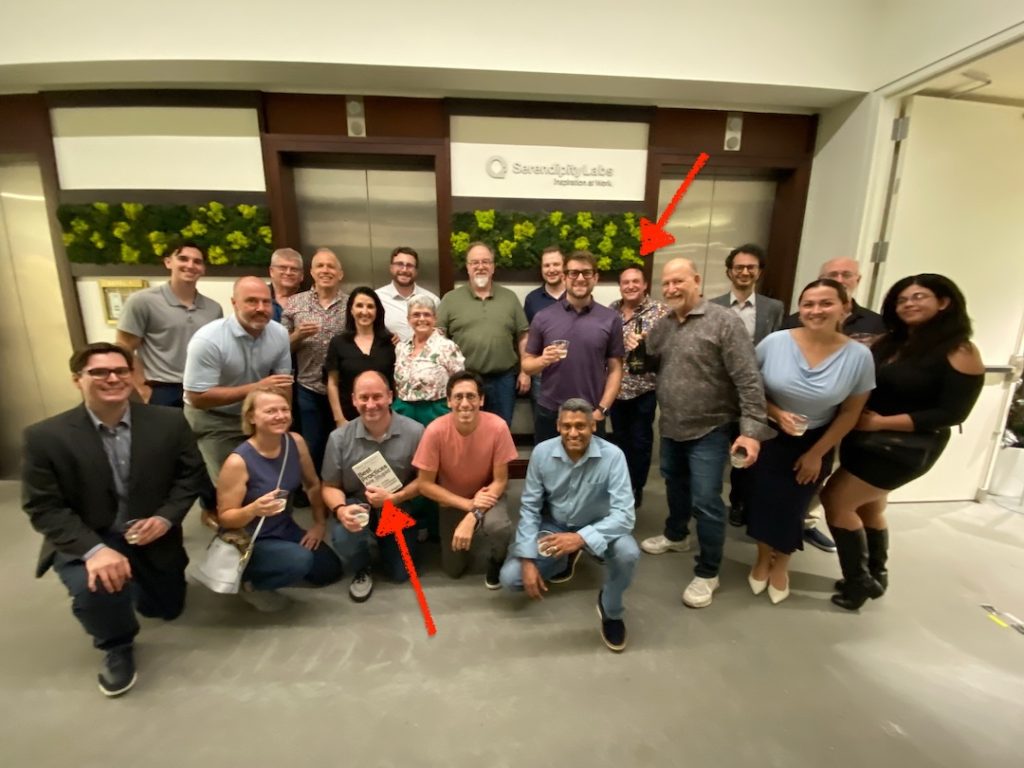
Last night I judged a ProductTank Orlando competition. The task: design the bookstore of the future in a world where AGI exists.
Four teams of four people each. Three judges.
Here’s what struck me.
Every team arrived at roughly the same theme. Human connection. Sensory experience. Depth. The solutions themselves looked very different. One pitched a bookstore free of all technology. Another blended books and AI throughout.
But how they got there told an even bigger story.
The team that won didn’t just have the best idea. They leveraged everyone’s unique capabilities before diving in. Before anyone shouted out a concept, they mapped each other’s strengths. Then they played to them.
Ironically, the team that pitched a “technology-free bookstore” did all their work on phones. They never touched the flip charts or sticky notes in the room.
And the biggest miss across all four teams? Nobody truly challenged the prompt. Nobody asked “what’s a book?” or “what’s a store?” Everyone started from Barnes & Noble and adjusted from there.
Close behind: nobody designed their process before diving in. Ideas got shouted out, the loudest voices dominated, and the quieter ones faded back. A few minutes of silent individual brainstorming first would have surfaced more ideas and pulled everyone in.
A few things I’ll be carrying into my own work:
– Surface assumptions before you start.
– The loudest voice isn’t always the best idea. Let people think first, then share.
– Different strengths only help when you know what they are.
Thanks to Curtis Michelson, Martin Alaimo, and Sulivan Santiago for putting this together. Brilliant session on so many levels!
(That’s me in the back in the poker chip shirt. One of the winners is holding my book “Best Practices Are Stupid.”)