
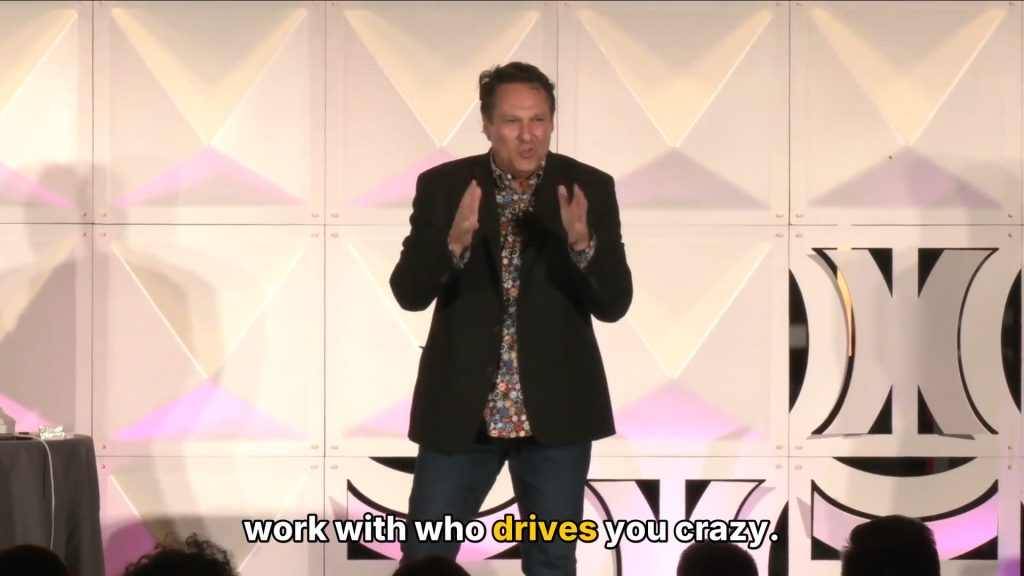
For years, I opened my Personality Poker keynote with a simple question:
“Think about the people in your life. Are they similar to you, or are they different?”
Then I’d continue:
“Odds are they’re similar. And in your personal life, that’s great. But at work, that kills innovation.”
There was nothing wrong with that opening, but it didn’t create much of an emotional response.
With the launch of my You’re Not Playing with a Full Deck book back in April, I decided to completely change the opening of a speech I’d been delivering for years…well, actually decades.
“There’s someone at work who drives you crazy. It might be a coworker. It might be somebody you supervise. It might even be your boss.”
Then I pause and add:
“If they’re in the room, don’t point to them.”
People laugh.
And then I tell them that over the next 45 minutes, I’m going to try to convince them that the person they just pictured in their mind, the person who drives them nuts, is actually the person they need the most.
I’ve included the first 30 seconds of this new opening in the video with this post (scroll down).
So What’s Different?
The underlying message hasn’t changed. Both openings are about why we need people who think differently from us.
But the emotional experience is completely different.
In the first version, I ask people to consider an abstract idea. They think about relationships in general. There’s no real emotional investment.
In the second version, something happens almost instantly.
Everyone pictures someone specific. One person.
They see that person’s face. They remember a frustrating conversation. They might even feel a little irritation.
And when I suggest that this person might be the one they need most, I’ve created a conflict in their minds.
“How could that possibly be true?”
Now they’re curious. They’re emotionally invested. And they’re listening.
The difference isn’t the information. It’s the personal connection.
The Lesson for Anyone Who Communicates
And this applies to much more than just keynote speeches.
Whether you’re delivering a sales pitch, leading a meeting, presenting an idea, or having an important conversation, there’s a lesson here.
Don’t just ask yourself, “What do I want people to understand?”
Ask yourself, “What do I want them to picture? What do I want them to feel? What personal experience can I tap into?”
You don’t need to manufacture drama or manipulate emotions. You simply need to connect your message to something your audience already cares about.
Sometimes the smallest change in language creates the biggest change in impact.
I didn’t change my message. I changed the way people experienced it.