
The advantage isn't the technology. It's knowing where to focus, what to solve, and who to involve.
I've spent thirty years on this question. AI just raised the stakes.
I use AI every day. Research, analysis, code, strategy. It helped build this page. So this isn't an argument against technology.
It's an argument about the decisions it can't make for you.
AI is putting extraordinary capabilities in almost everyone's hands. Work that once took a team weeks now takes an afternoon. That's good news. But when a capability is easy to get, having it stops being an advantage.
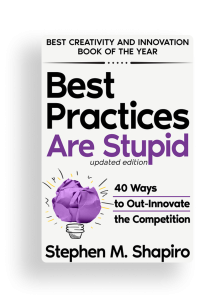
I wrote a book called Best Practices Are Stupid. Copying what already works for everyone else makes you competent, never different. What's changed is how fast anyone can copy.
I've watched this for thirty years, long before generative AI. More capability never told an organization where to focus. If everyone can do more, the question is where doing something differently actually matters. Innovate where you differentiate. AI didn't create that question. It made it urgent.
Technology gives us more answers. Someone still has to decide which questions matter.
What doesn't commoditize is judgment.
Human-Driven Innovation is the belief that technology should amplify human judgment, not replace the choices that create differentiation.
This isn't about people doing all the work. Let the tools do what they're good at.
Three of those decisions determine whether you're different or just capable.
I started at Accenture as an industrial engineer. My job was efficiency. Faster, cheaper, better.
Then a project came along that would eliminate ten thousand jobs, and I realized I was answering the wrong question. Not "how do we do this faster?" but "what should we be doing differently in the first place?"
That question took me from process improvement to innovation. It led me to build a 20,000-person practice at Accenture, and it has shaped every book I've written since.
Eight books. Fifty countries. Speaker Hall of Fame. Clients including NASA, 3M, Microsoft, Marriott, P&G, and USAA.
These started as three separate books, written years apart. I thought they were three different ideas. AI is what made me see they were one.
AI can help with every one of these. It can't own them. In thirty years I've rarely seen an organization do all three well. Most are good at one.
Focus
Not everything deserves innovation. Most organizations spend heavily improving things customers don't value, or things competitors can copy by lunch.
Pick the few places where being different changes whether someone chooses you. Be competent everywhere else.
Innovate where you differentiate.
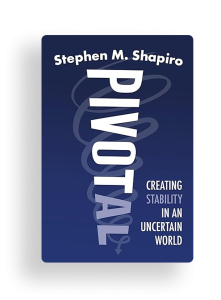
PIVOTAL shows you how to find those few places.
Questions
Most teams solve the problem they were handed. Often it's the wrong one.
AI will happily generate a thousand answers to a badly framed question. Change the question and you change the solutions you can see.
The questions we ask impact the solutions we get.
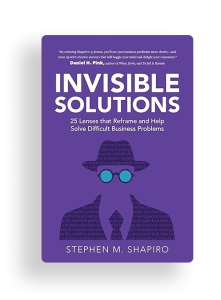
Invisible Solutions gives you 25 ways to reframe a problem.
People
Innovation isn't the biggest team or the most diverse one. It's the right mix of thinking for the work.
The person who sees what you can't is usually the one who thinks least like you. Often the one who drives you crazy.
I've watched this land in Personality Poker sessions for years. Someone looks at the cards in their hand, then at the colleague who drives them crazy, and realizes that person is holding exactly what the team is missing. You can see it on their face.
Who you are not is an opportunity for collaboration.
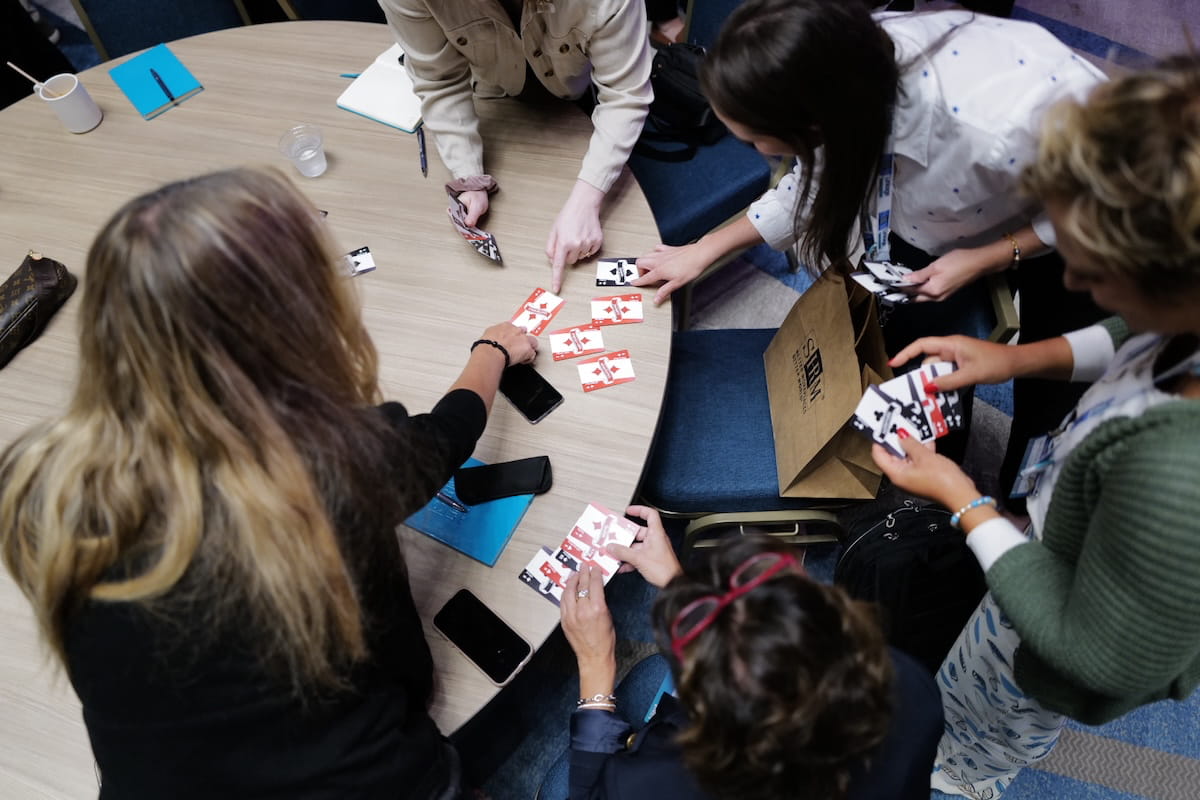
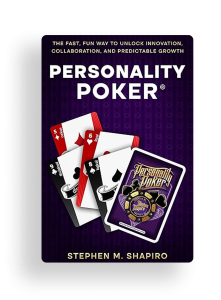
Personality Poker® shows a team who's missing from the table.
If one of those was uncomfortable, that's the useful part.
The future of innovation isn't people versus AI. It's people deciding what matters, with better tools than we've ever had.
Shaped by people. Multiplied by AI.
Use AI aggressively. Just don't hand it your judgment. And if you're not sure which of the three your organization skips, that's usually the conversation worth having.